


Blog · Winter
Winter Camping: The Basics
Sleeping outside in winter, and staying warm, is something you can learn. The silence of the snowy forest, the starry sky and morning coffee in the sun are well worth a few precautions.
Here are the basics of winter camping: equipment, setting up camp, meals, the night and safety.
Why camp in winter
No mosquitoes, nearly empty trails, and snow that makes a perfect floor for the tent. Winter camping takes more preparation than in summer, but it opens up a side of nature few people see. It’s also the foundation of any multi-day northern expedition.
Where to camp near Québec City
Several Sépaq national parks keep campsites and ready-to-camp units open in winter, including Jacques-Cartier National Park, less than an hour from the city. For a first night, choose an accessible site, close to a car or a shelter, rather than a remote one.
The equipment
- The sleeping bag: designed for winter, with a comfort rating well below the expected temperature. A liner adds a few degrees.
- Two sleeping pads: the cold comes mostly from the ground. Combine a closed-cell foam pad with an insulated inflatable pad.
- The tent: a four-season tent that stands up to wind and snow. You can also sleep in a snow shelter, such as a quinzhee.
- The stove: butane canisters work poorly in the cold. A naphtha (white gas) stove stays reliable in extreme cold.
- Clothing: the three-layer system, a down jacket for camp and dry clothes kept for the night. See our article How to dress for winter in Quebec.
- The rest: a snow shovel, a headlamp (with lithium batteries), an insulated bottle and a first aid kit.
No need to buy everything: we rent winter camping kits (tent, extreme-cold sleeping bag and insulated pads).

Setting up camp
- Choose a spot sheltered from the wind, away from dead trees or branches loaded with snow.
- Pack down the snow with your snowshoes or skis over the tent area, then let it harden for a few minutes before pitching the tent.
- Anchor the tent with snow stakes or bags filled with snow, and ventilate it: breathing produces condensation that freezes on the fabric.
- Set up a kitchen away from the tent, digging a bench and a counter into the snow.
Eating and drinking
Your body burns a lot of energy to stay warm: plan hot, rich meals and snacks that are easy to eat with mittens on. Water comes from melting snow, which takes time and fuel: start with a little water in the pot so you don’t scorch the bottom. Store water bottles upside down so the cap freezes more slowly, and drink something hot often.

Getting a good night’s sleep
- Move around a bit before getting into the bag: go to bed warmed up, not chilled.
- Change into dry clothes to sleep, never the day’s clothes, damp with sweat.
- A tightly closed bottle of hot water at the bottom of the bag warms your feet.
- Keep anything that mustn’t freeze inside the bag: batteries, phone, water bottle, boot liners.
- Don’t close yourself completely inside the bag: the moisture from your breath dampens the insulation.
Safety
- Leave your itinerary with someone you trust and bring a way to communicate (there’s no cell coverage everywhere).
- Never use a stove inside a closed tent: risk of carbon monoxide poisoning.
- Learn to recognize the signs of hypothermia and frostbite, and keep an eye on each other.
- Check the weather, and postpone the outing in extreme cold or a major storm.
For a first time: go with a guide
The easiest way to try it is to go with someone who knows how. During our introduction to winter camping in Jacques-Cartier National Park, your guide shows you how to set up the shelter, cook and manage the cold, and spends the night with the group. Equipment is provided. We also offer winter camping in the Vallée Bras-du-Nord. And when you’re ready for several days, our Nordic ski expeditions combine gliding and camping in the forest.
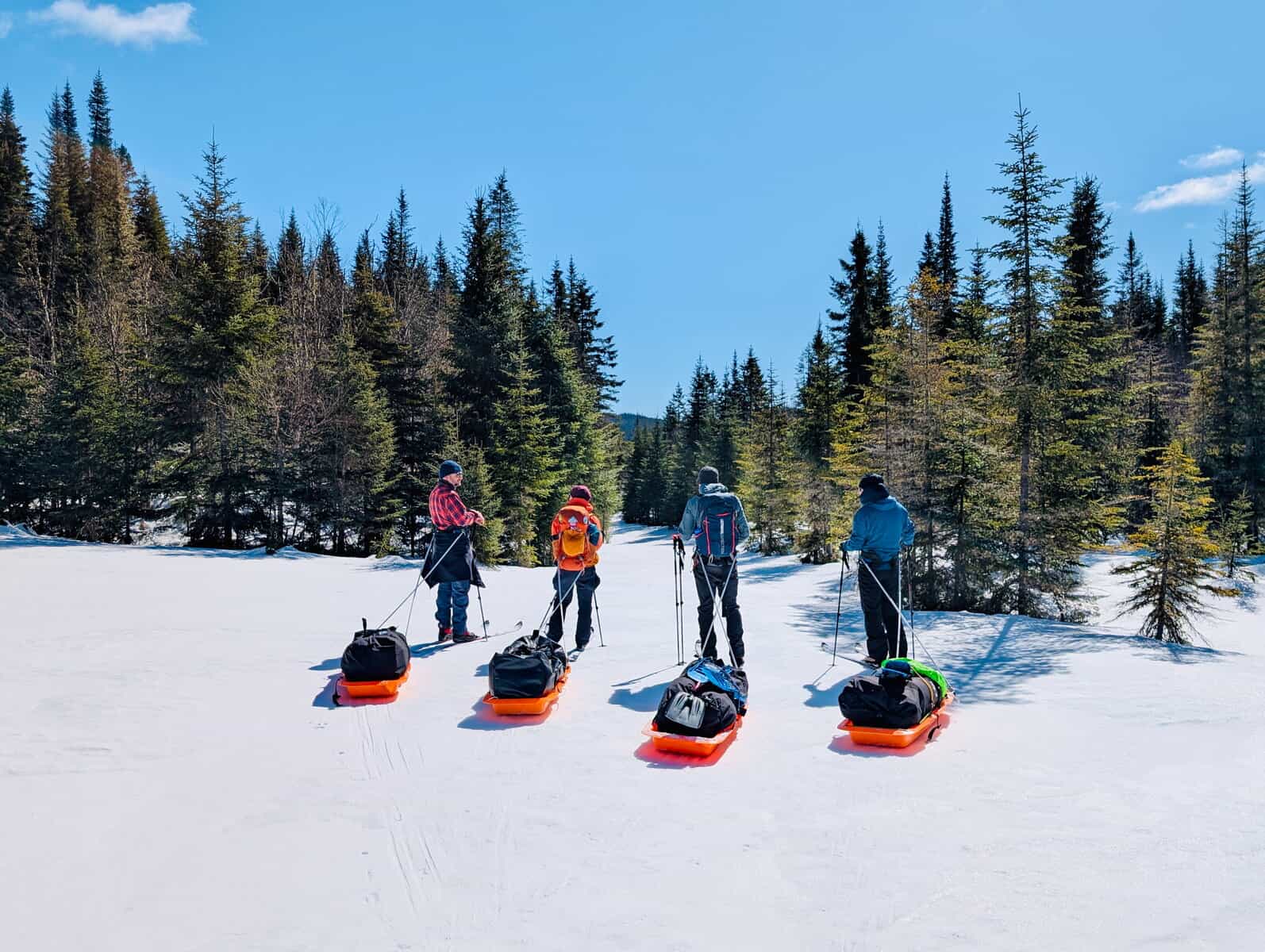 Boreal forest expedition
FAQ
Frequently asked questions
Do you get cold at night when winter camping?
Not with the right equipment: a winter sleeping bag, two insulated pads and dry clothes to sleep in. The cold comes mostly from the ground, hence the importance of the pads.
Which sleeping bag do you need?
A bag designed for winter, with a comfort rating well below the expected night temperature. A liner adds a few degrees.
Can you go winter camping without experience?
Yes, as long as you start with a guide or at an easy-to-reach site. Our introductions are designed for first-timers, equipment provided.
Where can you go winter camping near Québec City?
In Jacques-Cartier National Park, less than an hour from the city, or in the Vallée Bras-du-Nord. Several Sépaq parks keep campsites open in winter.
Can you rent the equipment?
Yes. We rent winter camping kits (four-season tent, extreme-cold sleeping bag, pads) at our shop on avenue Cartier.