


Blog · Winter
Winter Activities in Québec City: Snowshoeing, Skiing and Camping Near the City
From December to March, Québec City has snow on its doorstep. Less than an hour from Old Québec, Jacques-Cartier National Park and Camp Mercier, in the Laurentides Wildlife Reserve, offer snowy forests, valleys and trails for every level.
This guide presents the winter activities our guides offer there: how they work, who they’re for and how to choose. Rates, schedules and minimum ages are on each activity page.
Two areas less than an hour from Québec City
Jacques-Cartier National Park is about 45 minutes from the city. Its glacial valley, deep between the mountains, brings together snowy forests, a partly frozen river and fine views of the slopes in winter. Most of our outings take place there.
Camp Mercier, in the Laurentides Wildlife Reserve, is about an hour from Québec City. At altitude, it has some of the most reliable snow in the region. You’ll find a true boreal forest of spruce and fir, and well-groomed cross-country ski trails.

Snowshoeing: the easiest way to discover winter
If you were to do only one activity, this would be it. Snowshoeing takes no technique: you simply walk, floating on the snow. It’s the ideal activity for a first taste of the Quebec winter, with family or friends.
At Camp Mercier, the trail goes from fir woods to open ridges with views of the mountains. Along the way, your guide helps you read animal tracks and talks about the boreal forest. See the snowshoe outing at Camp Mercier.
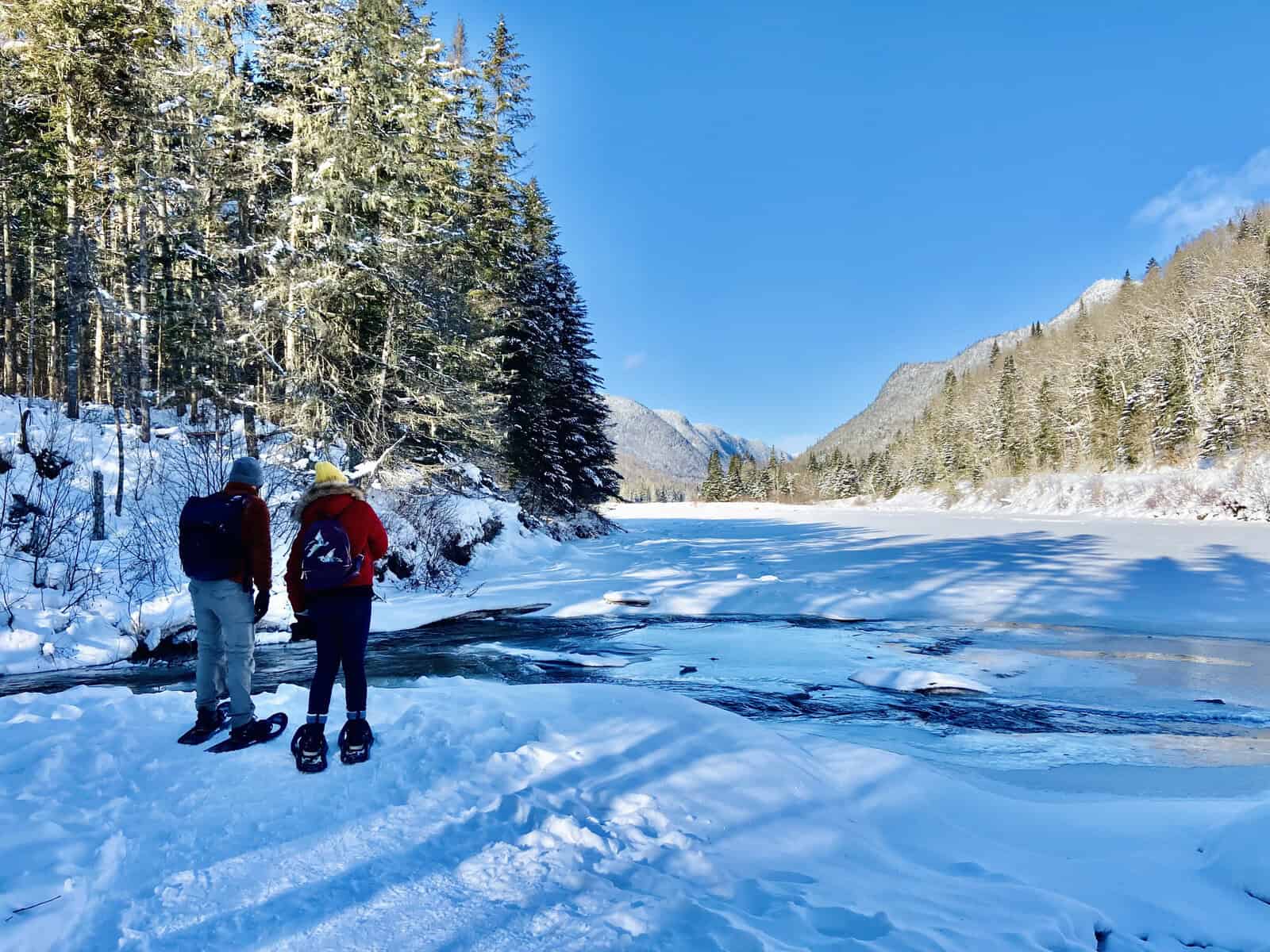
In Jacques-Cartier National Park, you follow forest trails at the bottom of the valley, along the river. The guide stops to talk about the park’s wildlife, plants, geology and history, and the outing includes a tasting of local products. See the snowshoe hike in Jacques-Cartier.
Cross-country skiing at Camp Mercier: learning on great trails
Camp Mercier is known for the quality of its trails. It’s a good place to put on cross-country skis for the first time. An instructor teaches you the basics of classic skiing: gliding, turning and stopping, then climbing and descending. The exercises follow your pace, in a small group.
See the introduction to cross-country skiing.
Ski-shoeing: between skiing and snowshoeing
The ski-shoe (Hok ski) is a short, wide ski with a built-in skin under the foot. It combines the glide of cross-country skiing with the grip of a snowshoe: you move easily on the flat, climb without slipping back and can leave the trails to explore the forest. It’s quick to get the hang of, even with no skiing experience.

Nordic skiing: to get off the trails
Nordic skiing sits between cross-country and alpine skiing. The skis are wider, with fish-scale bases and metal edges. You add a climbing skin for the uphills, and the free heel allows telemark turns on the descents. Your guide takes you into the forest, in a quiet area of the park, to make your own way through untracked snow. Some skiing experience is recommended.
See the Nordic skiing discovery outing. Not sure which type of skiing is for you? Read our article Nordic skiing: cross-country or alpine?.

Backcountry ski touring: for good alpine skiers
Far from the lifts, alpine ski touring comes in two parts: the climb with skins under your skis, then the descent in natural snow, through the glades of the Jacques-Cartier valley. Your guide teaches you pacing, how to use the equipment, reading the terrain and winter safety.
A good alpine skiing foundation is required. In natural snow, controlling your turns and speed takes more technique than at a resort: an advanced skier on groomed runs is often at a beginner or intermediate level off-piste. For this outing, you meet us directly at the park. See the introduction to backcountry ski touring.
Winter camping: spending a night outside
Sleeping outside in winter, and staying warm, is something you can learn. In Jacques-Cartier National Park, your guide shows you how to manage the cold, cook outdoors and build your shelter: a quinzhee (snow shelter) or a winter tent, depending on conditions. The guide spends the night with the group. Two options are offered: 2 days and 1 night for a first immersion, or 3 days and 2 nights to go further. Camping gear and meals are provided, and the activity is suitable for families.
See the introduction to winter camping. To learn more, also read our article Winter camping.

Which activity should you choose?
The table below sums up who each activity is for. When in doubt, snowshoeing is the best place to start.
| Activity | For whom | Experience |
|---|---|---|
| Snowshoeing | Everyone, with family or friends | None |
| Cross-country skiing | Those who want to learn to glide | None |
| Ski-shoeing | Gliding through the forest without ski technique | None |
| Nordic skiing | Skiers who want to leave the trails | Some skiing experience |
| Backcountry ski touring | Good alpine skiers | Good alpine skiing foundation |
| Winter camping | Anyone curious about sleeping outside, families | None |
How a guided outing works
- Transportation: a shuttle leaves Old Québec in the morning (Place d’Armes and Gare du Palais) and brings you back in mid-afternoon. You can also drive there yourself.
- Equipment: snowshoes, skis, boots or camping gear depending on the activity, fitted on site by your guide.
- The meal: a hot lunch with soup, eaten in a shelter or on the trail depending on conditions, and a hot chocolate at the break.
- Weather: outings run rain or shine. In extreme cold or with too little snow, they are postponed.
Dressing right for a day outside
The secret is layers. Next to the skin, a technical base layer (never cotton, which holds moisture). Over that, an insulating layer such as fleece. Finally, a snow jacket and snow pants that block the wind. Add a toque, a neck warmer, mittens (warmer than gloves), wool socks and winter boots. When you’re active you warm up quickly: better to take off a layer on the climb and put it back on at the break.
All the details are in our article How to dress for winter in Quebec. Travelling light? We rent complete winter clothing kits, with delivery available.
Want more than a day?
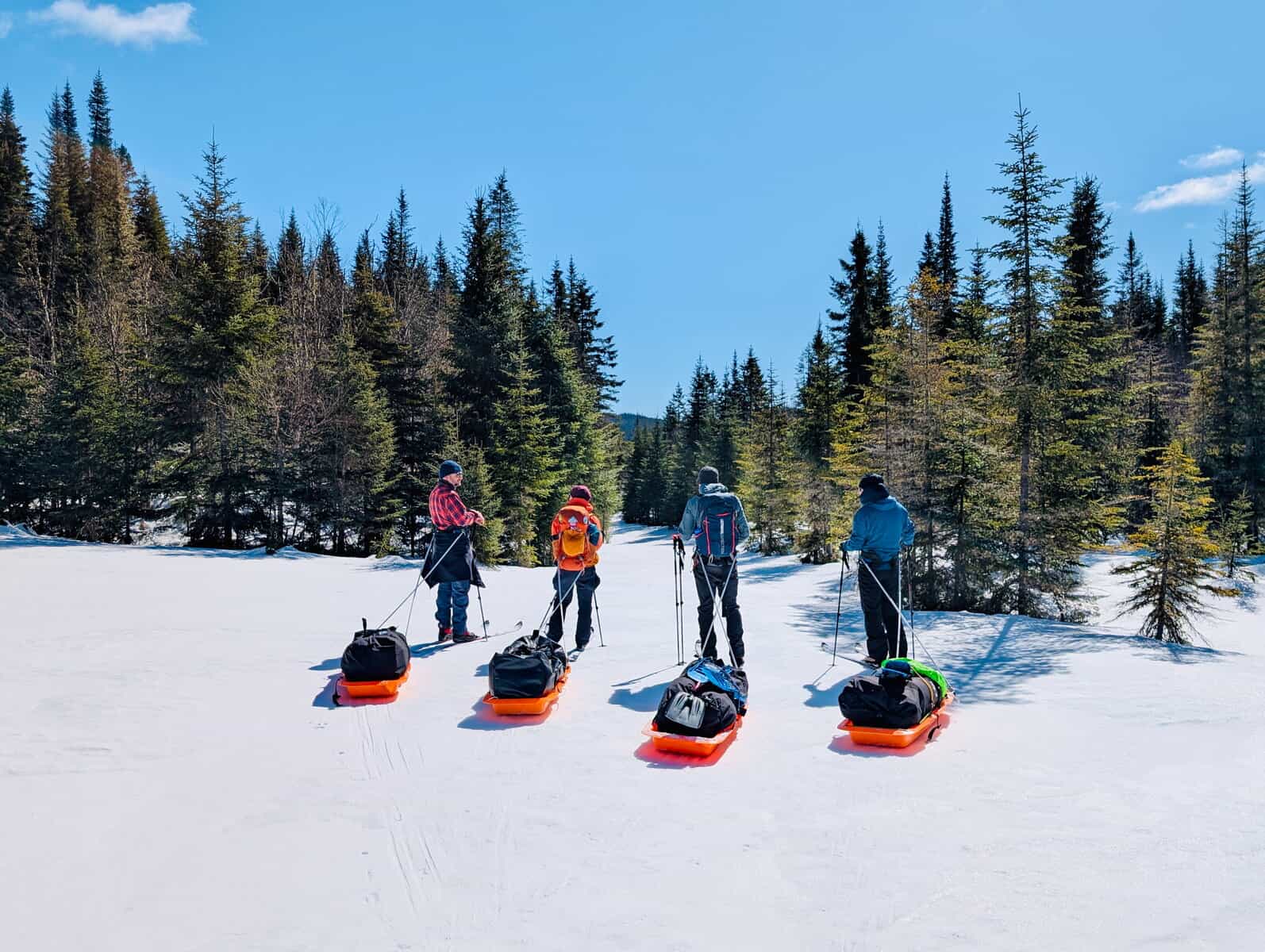
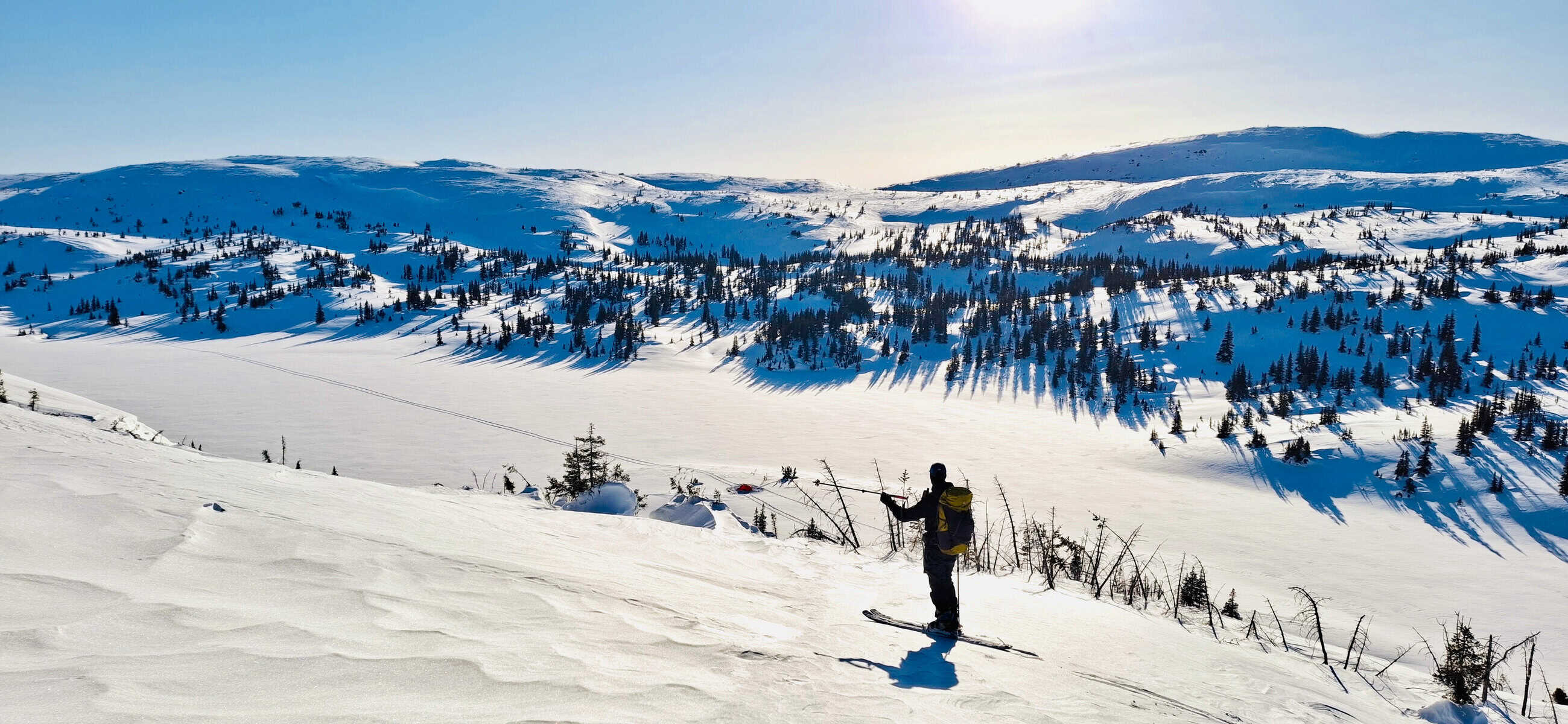
Our winter trips take you further, over several days: snowshoeing and Nordic skiing in the Charlevoix mountains, Nordic ski expeditions with winter camping in the boreal forest or in the Groulx Mountains. And if you’d rather head out on your own, you can rent snowshoes at our shop on avenue Cartier.
 Snowshoe adventure in Charlevoix
 Charlevoix Traverse on Nordic skis
 Boreal forest expedition
 Groulx Mountains expedition
FAQ
Frequently asked questions
When is the winter activity season in Québec City?
From December to March, depending on snow. Camp Mercier, at altitude, often has snow earlier and longer than the city.
Do I need experience?
Not for snowshoeing, cross-country skiing, ski-shoeing or winter camping, which are for beginners. Nordic skiing requires some skiing experience, and backcountry ski touring a good alpine skiing foundation.
Can I get there without a car?
Yes. A shuttle leaves Old Québec in the morning (Place d’Armes and Gare du Palais) for most activities. For backcountry ski touring, you meet us at the park.
Are the activities suitable for children?
Yes. Snowshoeing and winter camping are the most family-friendly. The minimum age varies by activity and is shown on each page.
What happens in extreme cold?
Outings run in all weather. In extreme cold or if there isn’t enough snow, the outing is postponed.